


When Sacred Stories hurt:
asking the questions out loud
I think a lot of us were introduced to the Bible the same way we were introduced to vegetables — we were told it was good for us, we didn’t fully understand it, and asking too many questions made adults nervous.
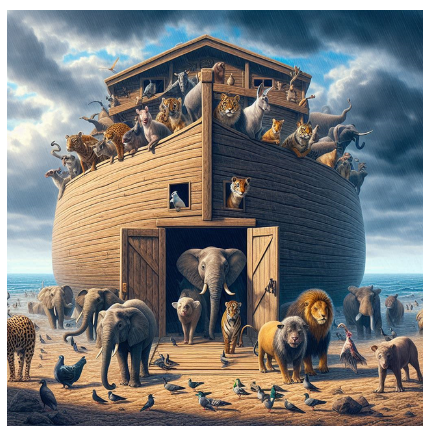
As children, we sat in small chairs, coloring pictures of smiling animals walking into a boat two-by-two, while someone calmly explained that almost everyone else on Earth had just drowned. Somehow we were supposed to find that comforting. We nodded, because everyone else nodded. But deep inside, many of us carried a quiet question we didn’t dare say out loud: “Wait… I’m supposed to feel peaceful about this?”
This post is for the people who had those questions — and for the adults who still do
7 Absurd Lies About Adam and Eve the Church Never Dares to Explain — Spinoza
Born Guilty Before You Even Breathed
Do you remember being told you were “born guilty” — stained before your first breath because of something a woman supposedly did in a garden thousands of years ago? That’s not a spiritual awakening. That’s a guilt-installation program, aimed at a child. The doctrine of “original sin” doesn’t just teach morality — it teaches self-hatred as a starting point, as if being human is already a crime.
The First Crack: God’s “You’ll Die Today” Prediction
Genesis says God tells Adam, “In the day you eat of it, you shall surely die.” Clear, direct, no wiggle room. Then Genesis also claims Adam lived 930 years. So either God lied, God was wrong, or the story isn’t literal history. And notice what happens next: instead of admitting the obvious, theology shows up like a lawyer trying to explain how “today” secretly means “almost a millennium later.” That’s not faith — that’s word gymnastics.
Enter Spinoza: The Man Who Got Punished for Reading Carefully
Baruch Spinoza treated the Bible like any ancient text: Who wrote it? When? Does it stay consistent? Does the logic hold? That simple method was enough to get him excommunicated at 23. Why? Because once you read Genesis with your brain turned on, the “perfect divine book” starts looking like human storytelling — powerful and symbolic, yes — but not courtroom evidence that you were born broken.
Absurdity #1: God Plays Hide-and-Seek and… Loses?
After Adam and Eve eat the fruit, they hide, and God calls out: “Where are you?” If God is all-knowing, why is he asking location questions like a dad who can’t find the TV remote? The text shows God walking, searching, gathering information: “Who told you you were naked?” “Have you eaten?” These aren’t rhetorical. That’s a character in a story, not an all-seeing cosmic mind-reader.
Absurdity #2: Punished Before They Could Even Understand “Wrong”
The fruit is from the “tree of knowledge of good and evil.” Meaning: before eating, they don’t have moral knowledge. So God gives a command — “Don’t eat” — to beings who, by the story’s own logic, can’t fully grasp moral consequence yet. Then they’re punished anyway, along with every human afterward. That’s like punishing a toddler for breaking a rule they don’t understand… then cursing the entire bloodline forever because the toddler touched the shiny thing.
Absurdity #3: “Let US Make Man” — Who Is “Us”?
Genesis has God saying “Let us make man in our image,” and later “man has become like one of us.” So who is “us”? Christians often retrofit the Trinity here — but that doctrine is developed much later. Others say angels, but then humans are made in angel-image too. The simplest explanation is the oldest one: these texts preserve traces of evolving beliefs and older traditions — not a single, flawless, frozen theology from the sky.
Absurdity #4: Childbirth Pain as a “Divine Punishment”
Genesis claims women’s childbirth pain is punishment for Eve. This verse has been used for centuries to justify women’s suffering and submission. It’s dark when you think about it: half of humanity told their pain is what they “deserve” because of a mythic ancestor. If this story is symbolic, it’s an ancient attempt to explain why childbirth hurts — not a holy permission slip to enforce patriarchy.
Absurdity #5: Cain’s Wife Appears Like a Plot Hole With Legs
Cain kills Abel, gets banished… and suddenly has a wife. Where did she come from if there are only four humans? The classic patch is, “They had other kids not mentioned.” Okay — but then humanity begins with incest, which the Bible later condemns. The literal reading forces you into contradictions the text never resolves — because it’s not written like history. It’s written like an origin story.
Absurdity #6: The Serpent Wasn’t Satan (Until Later Theology Needed Him To Be)
In Genesis, the serpent is just “a crafty animal.” It never says “Satan.” The devil interpretation is added later to fit a larger system (cosmic evil, spiritual warfare, salvation mechanics). In the original story, it’s basically: a talking snake in a magic garden persuades morally-undeveloped humans to eat wisdom fruit… and the universe falls apart. If that sounds like mythology, that’s because it reads like mythology.
What This Really Means: The Guilt Was Never Yours
If the foundation story is symbolic, contradictory as literal history, and later used as a weapon — then the “born broken” message collapses. Not because spirituality collapses, but because institutional control collapses. Spinoza’s point wasn’t “nothing is sacred.” His point was: stop turning myths into handcuffs. You weren’t born stained. You were taught to carry a burden that made you easier to manage.
Put the Guilt Down
If this hit you in the gut, that’s not “Satan attacking.” That’s your mind recognizing something you weren’t allowed to say out loud. The garden doesn’t have to be real for the story to be meaningful — but it should never be used to convince children they’re guilty for existing. The serpent wasn’t your problem. The shame script was.
More Questions About Adam and Eve Nobody Warned You About
The Day Humanity Discovered Clothing (and Anxiety)
According to the story, before eating the fruit Adam and Eve were happily naked and felt no shame. After eating it, they suddenly realized, “Oh no… we need pants.”
Notice something important:
The first result of the “fall” wasn’t murder, violence, or corruption.
It was self-consciousness.
They became aware of themselves.
In other words, the story might not be describing sin — it might be describing the moment humans became psychologically aware. The moment we started thinking:
How do I look?
What do others think of me?
Am I acceptable?
Congratulations. Humanity didn’t fall into evil.
Humanity fell into awkwardness.
The first sin may not have been disobedience.
It may have been insecurity.
The Real Meaning of the Garden
Think about the elements:
Garden → peace
Tree → awareness
Fruit → knowledge
Expulsion → adulthood
The story suddenly reads very differently.
Childhood feels like a garden.
No bills. No taxes. No existential dread at 2:17 AM wondering why we exist and why socks disappear in dryers.
Then one day you “eat the fruit.”
You realize you will die someday.
You must work.
You must make choices.
You can hurt others.
You didn’t get kicked out of paradise by God.
You grew up.
Why Work Suddenly Became Miserable
After the fruit, Adam must now “work by the sweat of his brow.”
This sounds less like punishment and more like a universal human experience.
Every child eventually learns:
Food does not appear magically.
Laundry does not fold itself.
Groceries cost money.
And the mysterious adults who used to run your life were also confused the entire time.
The story may be ancient humans trying to answer a simple question:
“Why is life hard?”
Instead of science, they gave a narrative explanation:
We once lived in innocence. Awareness made life complicated.
That’s not theology.
That’s psychology.
Why Humans Suddenly Fear Death
Before the fruit, humans live carefree.
After the fruit, mortality becomes part of existence.
This again reads less like a curse and more like awareness.
Animals don’t sit awake at night worrying about death.
Dogs don’t panic about retirement planning.
Cats don’t fear philosophical meaninglessness (they only fear vacuum cleaners).
Humans do.
Knowledge gave us intelligence — and anxiety came free with it.
The “fall” may not describe punishment.
It may describe the birth of human consciousness.
Why the Story Was So Powerful
The story worked for thousands of years because it answered emotional questions, not scientific ones.
It explained:
suffering
work
death
fear
guilt
growing up
Ancient people didn’t write biology textbooks.
They wrote meaning.
The problem began when symbolism was turned into courtroom evidence against humanity.
A metaphor became a legal charge.
And suddenly people were told:
“You’re not struggling because life is difficult.
You’re struggling because you’re guilty.”
That changes a person’s entire self-image.
The Hidden Psychological Effect
Here is the real issue.
When a child is told:
“You were born flawed,”
that child doesn’t become moral.
That child becomes anxious.
Instead of learning:
“I sometimes make mistakes,”
they learn:
“I am a mistake.”
And many people quietly carry that feeling into adulthood without knowing where it came from.
They feel unworthy.
They feel watched.
They feel afraid of disappointing an invisible authority.
Not because they are bad people…
but because they were taught a story in the wrong way.
Why Humor Actually Helps
Humor does something powerful.
It lets the brain question without panic.
If you directly attack beliefs → defenses rise.
If you gently laugh → the mind opens.
You aren’t laughing at people.
You’re laughing at the interpretations that caused fear.
Because sometimes the healthiest spiritual moment in a person’s life is the first time they quietly think:
“Wait… maybe I’m not actually hated by the universe.”
A Gentle Closing Thought
Maybe the Adam and Eve story was never meant to teach that humanity angered God.
Maybe it was humanity trying to understand itself.
Why we worry.
Why we work.
Why we hide.
Why we feel shame.
Why we ask meaning questions no other animal asks.
The story may not be about humanity falling away from God.
It may be about humanity waking up.
And if that’s true, then the message isn’t:
“You were born broken.”
The message is:
“You became aware.”
And awareness is not a curse.
It is the beginning of wisdom.
Noah’s Ark: The Children’s Story That Raises Adult Questions
The World’s Largest Boat… Built by One Man?
According to the story, God tells Noah to build an ark roughly 450 feet long.
That’s about the size of a modern cruise ship.
Important detail:
Noah is not a shipbuilder.
Noah has no power tools.
Noah has no hardware store.
Noah has no forklift.
Noah has no engineering team.
He has three sons… and ancient woodworking tools.
People today need hundreds of trained workers, steel cranes, computers, and millions of dollars to build a ship that size.
Noah apparently did it in the backyard.
At some point the neighbors had to be asking questions:
“Hey Noah… why are you constructing a floating apartment complex in the desert?”
Two of Every Animal (Let’s Do the Math…)
We were told: two of every animal entered the ark.
Let’s think gently.
Today scientists estimate millions of species exist, and tens of thousands of land animal species alone.
So now Noah needs:
lions
polar bears
penguins
kangaroos
pandas
moose
snakes
termites
mosquitoes
and whatever creature lives at the bottom of the Amazon rainforest nobody has named yet
All arriving… from every continent… without airplanes.
Apparently kangaroos hopped from Australia to the Middle East without leaving fossilized migration trails or anyone noticing a parade of pandas crossing Asia.
And the sloths?
Those animals move slower than Wi-Fi in a basement.
They would have left before the pyramids were invented.
The Sanitation Department Problem
Now let’s discuss the part Sunday School quietly skips.
Animals… produce waste.
A lot of waste.
Two elephants alone produce roughly 250 pounds of manure per day.
Now imagine thousands of animals.
You would need the entire New York City sanitation department… and a second ark just to carry the sanitation department.
And then of course we have the question:
Who cleans the sanitation workers’ mess?
At some point Noah isn’t a prophet anymore.
He’s a janitor on a floating zoo.
Food Storage: The Floating Grocery Store
Every animal needs food.
Carnivores need meat.
Herbivores need plants.
Koalas eat one specific type of eucalyptus leaf or they refuse to exist.
Pandas barely recognize food that isn’t bamboo.
So now the ark is not only a ship and a zoo…
It is also the largest refrigerated grocery store in human history.
And remember — the flood lasts over a year.
No electricity.
No refrigeration.
No preservatives.
Yet somehow every animal receives its specific diet daily.
Meanwhile humans struggle to keep lettuce fresh for four days in a modern refrigerator.
Fresh Water vs Salt Water
During a global flood, the entire earth would be saltwater mixed with mud.
But many animals cannot drink saltwater.
Deer, cows, birds, and most land animals would die quickly without fresh water.
So now Noah must also run a global bottled water distribution system for thousands of animals while shoveling manure.
This is no longer a children’s story.
This is a logistical nightmare.
After the Flood… Everybody Goes Home?
When the ark lands, every animal must return to its natural habitat.
Penguins → Antarctica
Kangaroos → Australia
Polar bears → Arctic
Sloths → South America
So now imagine:
Two penguins waddling 10,000 miles across deserts and jungles.
Two koalas swimming across oceans.
And not leaving a single traceable migration pattern in the fossil record.
Even more impressive — no other civilizations anywhere on Earth recorded a global flood wiping out all humanity at the same time.
Egyptians kept writing history right through the supposed date of the flood… apparently completely unaware they had drowned.
What the Story Was Probably Trying to Say
Ancient cultures all over the world have flood stories.
Why?
Because floods were the most terrifying natural disaster people experienced. Rivers overflowed, entire villages disappeared overnight.
The story likely wasn’t a weather report.
It was a moral story:
Human behavior has consequences.
Violence destroys societies.
New beginnings are possible.
That message is meaningful.
The literal interpretation — floating zoos, global animal migration, and one family repopulating the earth — is not the point of the narrative.
Why Humor Matters Here
Laughing at the logistics isn’t mocking faith.
It’s recognizing that the story reads like symbolism, not engineering.
You can still value the message:
• Renewal
• Mercy
• Second chances
• Hope after catastrophe
But you don’t have to believe giraffes stood in line next to penguins waiting to board a wooden ship while Noah calculated mosquito seating arrangements.
A Gentle Closing
Sometimes a story can be sacred without being scientific.
Sometimes ancient people were teaching meaning, not meteorology.
And sometimes the healthiest moment in a person’s spiritual life is realizing:
Maybe the Bible was never meant to be a geology textbook, a biology manual, and a naval engineering document all at the same time.
Maybe it was people trying to understand life using the language and imagination available to them.
And that doesn’t destroy meaning.
It actually lets meaning breathe again.
Jonah and the Whale: A Three-Day Submarine Adventure
First Problem: Which Animal Exactly?
Most people picture a whale.
The original text actually just says “a great fish.”
Now this matters a lot.
Because whales are mammals, not fish — which already tells us the ancient writers were describing something they imagined, not something they biologically studied. They were working with the knowledge of their time.
Still… whether whale or giant fish, we now face the same question:
How does a human survive inside one?
Marine biologists struggle to keep humans alive inside boats underwater — and those have oxygen systems, lights, temperature control, and snacks.
Jonah had… sandals.
The Oxygen Situation
Let’s think gently and scientifically.
Inside a whale or large fish there is:
no breathable air
no oxygen circulation
extremely high carbon dioxide
crushing humidity
A human being inside any enclosed stomach environment would lose consciousness in minutes.
Jonah remains alive three days.
That’s no longer a miracle story — that’s a biological impossibility story.
This is less “underwater rescue” and more “living inside a wet sleeping bag that digests you.”
The Digestive System Problem
Whales and large fish don’t politely store food like refrigerators.
They digest it.
Stomach acids in large sea creatures are powerful enough to break down bone, tissue, and shells.
Within hours:
skin would burn
lungs would fail
body temperature would drop
dehydration would occur
Yet Jonah not only survives…
he composes a structured prayer.
If you’ve ever had heartburn, imagine writing poetry inside hydrochloric acid.
The Pressure Problem
Deep water animals dive to extreme depths.
Pressure increases rapidly underwater.
Even trained divers need controlled decompression chambers to avoid serious injury.
Jonah goes from:
ocean surface
to inside an animal
to shore
No decompression sickness.
No lung collapse.
No internal bleeding.
Even modern submarines don’t operate that smoothly.
The Transportation Mystery
Then comes the part nobody notices.
The fish knows where to drop him off.
Not just any coastline — the correct coastline, near Nineveh.
So now the fish has:
navigation ability
geographical awareness
a delivery schedule
We’ve upgraded from marine biology to postal service.
Jonah becomes history’s first overnight shipping package.
“Priority prophet delivery — signature not required.”
What the Story Might Actually Be About
The story reads very differently if taken symbolically.
Running away → avoidance
The storm → inner conflict
The fish → isolation
Three days → reflection
Release onto shore → personal change
It looks less like a zoology report…
and more like a psychological story about a person running from responsibility, hitting rock bottom, reflecting, and returning changed.
In other words:
Jonah wasn’t saved from a fish.
Jonah was saved from himself.
Why It Was Told This Way
Ancient people taught through story.
They didn’t write psychology textbooks.
They wrote narratives.
A giant fish is memorable.
An emotional therapy session is not.
The message:
You can run from your purpose…
but eventually life makes you stop and think.
Sometimes we only listen when everything else fails.
The Gentle Humor Point
You don’t have to mock the story.
But you also don’t have to believe marine life operated a temporary human life-support chamber.
The power of the story isn’t biological accuracy.
It’s recognition.
We’ve all been Jonah:
avoiding something
ignoring responsibility
hoping problems disappear
And then life “swallows” us — not literally, but emotionally — until we finally face what we were running from.
Closing Thought
Maybe Jonah isn’t about surviving a fish.
Maybe it’s about surviving yourself.
And maybe the story stayed powerful for thousands of years not because people believed in digestive-system miracles…
…but because people recognized their own lives inside it.